
When we describe something as fixed, we point to its strength and reliability. A fixed object stays in place and does not shift under pressure. The word also suggests that something has been repaired or made whole again. In everyday life, we trust what is fixed because it provides stability. That may be a railing that supports us or a foundation that holds steady. When discussing a fixed dental bridge, the same principles should apply. The restoration is meant to stay secure, provide lasting support, and restore what was missing in a way you can rely on every day.
Why a “Fixed” Bridge Stays in Place
A dental bridge is a restoration that replaces one or more missing teeth. They, quite literally, “bridge” the open space in your smile. It fills the gap with artificial teeth that are often supported by something strong enough to hold them in place.
When a bridge is described as fixed, it means the restoration is permanently secured in your mouth. You cannot remove it. Instead of coming in and out, it stays in place and functions much like natural teeth.
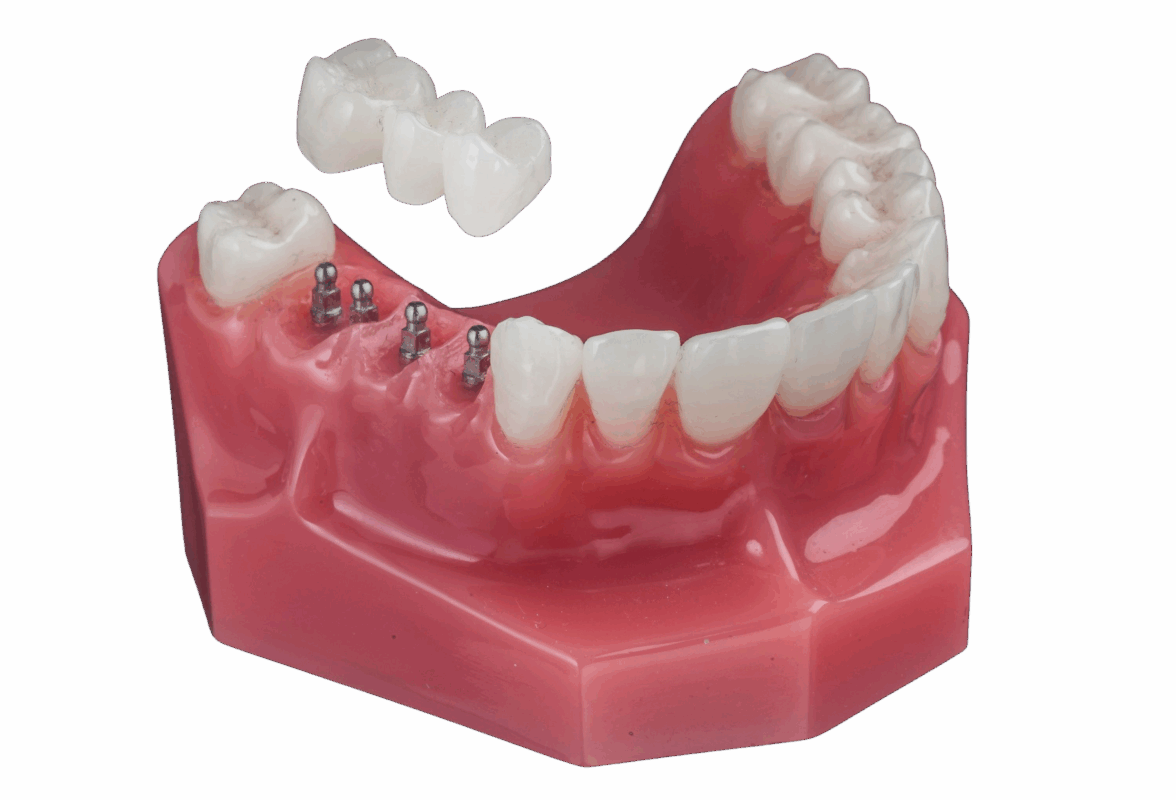
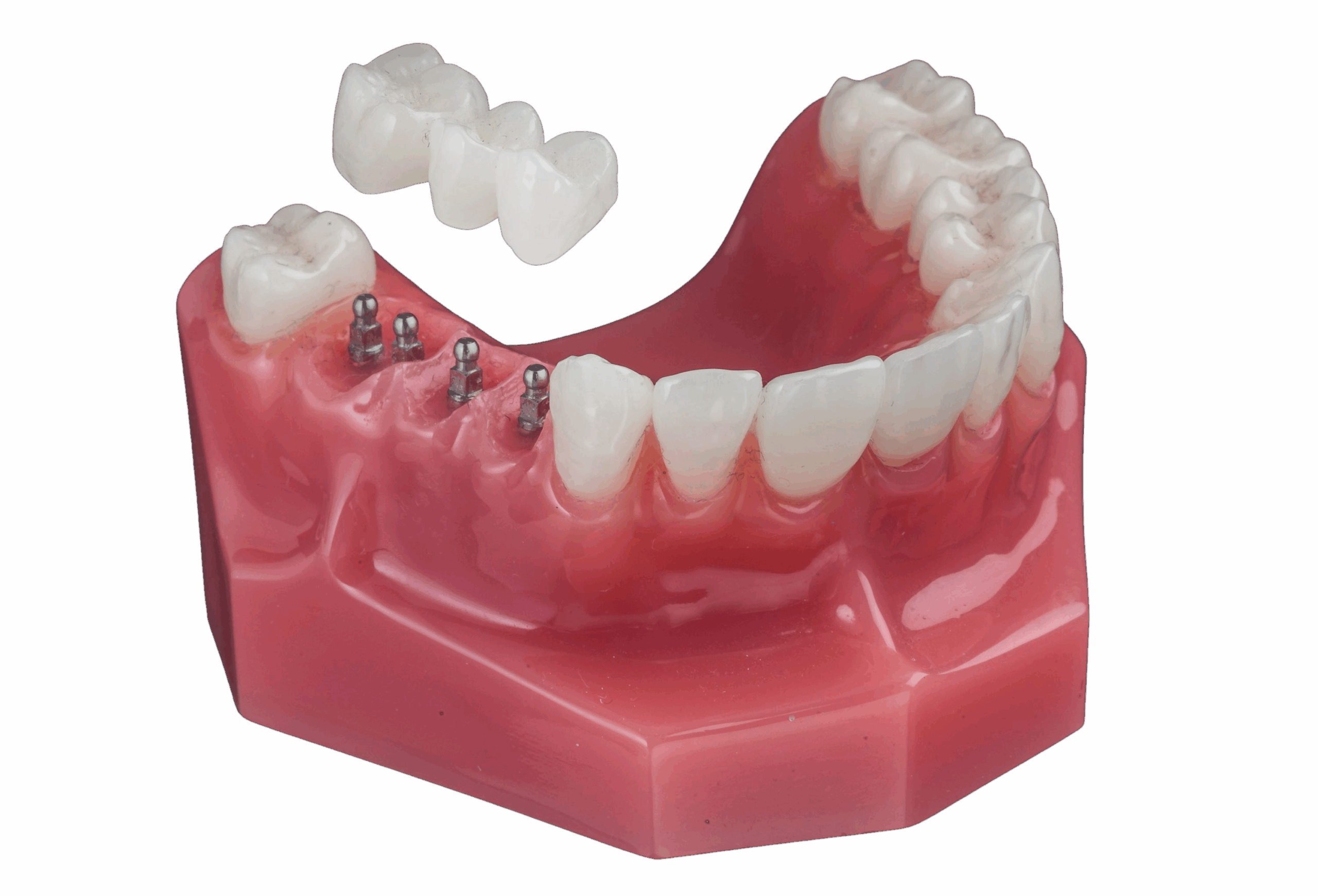
There are two main ways a fixed bridge can be supported. In a traditional design, the teeth adjacent to the empty space are reshaped to accommodate crowns, which then serve as anchors for the bridge. With an implant-supported bridge, we place small titanium implants directly into the jawbone. These implants act as artificial roots, providing a secure and lasting foundation for the bridge without involving the neighboring teeth. So, “fixed” refers to the permanent way the bridge is attached.
What Traditional Bridges Can’t Do for the Jawbone
A traditional fixed bridge relies on the natural teeth next to the gap to hold it in place. To prepare these teeth, we must remove some of their healthy enamel so that crowns can fit over them. While this creates the necessary space for the bridge, it also permanently alters those teeth and can leave them more vulnerable over time. Because the abutment teeth now carry the extra load of supporting the bridge, they face greater biting forces, which may cause them to wear down faster or even fracture.
Even though a traditional bridge fills the gap above the gums, it cannot replace what lies beneath the surface. Natural teeth have roots that extend into the jawbone, and each time you bite or chew, those roots stimulate the bone to keep it dense and strong. When a tooth is lost, its root is gone too, and without that stimulation, the bone begins to shrink. Since a bridge does not extend into the bone, it does nothing to prevent this resorption.
As the bone beneath the missing tooth area diminishes, it can gradually change the shape of your face and alter the way your restoration fits. While a traditional bridge restores appearance and function at the surface level, it cannot maintain the health of the underlying bone, which is critical for long-term stability.
The Dual Advantage of a Fixed Implant Bridge
Because we place a mini dental implant directly into the jawbone, the surrounding bone begins to fuse with it through a process called osseointegration. This natural fusion creates a stable, permanent bond between the implant and the bone, allowing the implant to function just like a tooth root. That stimulation keeps the bone healthy and prevents the gradual shrinkage that happens when a root is missing. By preserving bone density, implants help maintain the natural shape of the face and provide a foundation that stays strong for decades.
When implants support a bridge, it stands on its own without relying on neighboring teeth for support. We don’t need to reshape or cap adjacent teeth with crowns to hold the bridge in place. Instead, the implants carry the load, leaving the surrounding teeth untouched and stable. With the space securely filled, nearby teeth remain properly aligned, reducing the risk of shifting, bite problems, or uneven wear.
Implant-supported bridges, then, offer a twofold benefit. First, they protect the health of the jawbone from the inside. Second, they safeguard the strength and position of the natural teeth around them.
Restore Strength and Stability to Your Smile
A fixed restoration should do more than cover a space. The right solution should strengthen your bite, protect your remaining teeth, and support the health of your jawbone. Implant-supported bridges make this possible by providing lasting security and stability. At Diana Rodriguez and Associates, we can help you explore how this option fits your needs and long-term goals for your smile.
Contact us today to book your free consultation.
Stay connected with us on Facebook and Instagram for tips, updates, and a closer look at how we help our patients restore their smiles.