
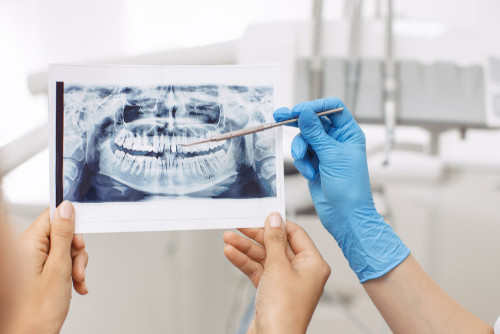
At Diana Rodriguez & Associates, we meet patients at many different stages of their tooth replacement journey. Some are missing one tooth. Others are facing more complex concerns that affect the entire mouth. Total mouth extraction is one of those situations that deserves a careful, thoughtful plan. When most or all remaining teeth can no longer support your health, comfort, or daily function, removing them may become part of a larger plan to treat infection, protect the surrounding tissues, and prepare your mouth for a stronger foundation.
With a range of treatment options and tooth replacement solutions, we can help you address the health concerns affecting your mouth and rebuild your smile with stable, long-term support. Our goal is to help you understand what can be saved, what needs attention, and which replacement option can help restore your oral health moving forward.
When Is Total Mouth Extraction Necessary?
Needing major dental care does not mean you did anything wrong. Teeth can reach a point where everyday function becomes difficult. During your exam, we look closely at each tooth, your gum health, your bone support, and any signs of infection before recommending a treatment plan.
Our goal is always to save natural teeth whenever possible. Periodontal treatment, fillings, crowns, root canals, and staged extractions may help preserve teeth that still have a healthy foundation. A total mouth extraction is considered only when most or all remaining teeth cannot be safely restored, and keeping them would likely lead to ongoing pain, infection, or worsening oral health.
Several factors may lead us to discuss this option:
- Severe, widespread decay may leave too little healthy tooth structure for fillings or crowns to provide lasting support.
- Advanced gum disease can damage the tissue and bone that hold teeth in place, often leading to loose teeth, bleeding gums, swelling, or tenderness.
- Multiple teeth may also be badly fractured, worn down, or weakened after years of dental work, making long-term repair less predictable.
- Ongoing infection can also make it harder for the mouth to heal and function comfortably.
Still, symptoms alone do not determine the answer. We make this decision only after a full exam, imaging, and a careful conversation about what can be saved, what needs attention, and what replacement options can help you move forward with a healthier foundation.
What Comes After Total Mouth Extraction?
After extraction, we focus on helping your mouth heal and preparing for tooth replacement. Some patients also need treatment for infection or gum disease before moving forward. Depending on your needs, we may recommend a deep cleaning, antibiotics, or other periodontal care to help create a healthier foundation.
From there, we give the gum tissue and bone time to heal according to your treatment plan. Every patient’s timeline looks a little different, especially when infection, bone loss, or advanced gum disease has affected the mouth. During this stage, we monitor your healing and discuss replacement options to help restore stable function.
Why We Often Recommend Mini Dental Implants
For many patients, we recommend implant-supported options because dental implants provide support from within the jaw. Dental implants are small titanium posts that we place into the jawbone. Once in place, the surrounding bone bonds with the implant surface. In many ways, the implant begins to function like a natural tooth root by supporting the dentures above it.
That connection can be especially helpful after tooth loss. Chewing and biting send signals to the jawbone that help maintain its strength. When teeth are missing, the bone no longer receives that same activity and can gradually shrink. Dental implants help reintroduce support within the jaw, which can help preserve the bone you still have.
At Diana Rodriguez & Associates, we primarily use mini dental implants for several important reasons. Mini dental implants are roughly half the size of traditional implants, so we can often place them in existing bone without grafting. We also use a minimally invasive technique, creating a small pilot hole through the gums and into the bone before placing the implant.
For many patients recovering after major tooth loss, mini dental implants offer a strong, streamlined way to support replacement teeth while reducing trauma to the surrounding tissues.
Discover What’s Possible for Your Smile
Widespread dental concerns can feel overwhelming, especially when pain, infection, or damaged teeth have affected your daily comfort. At Diana Rodriguez & Associates, we approach these situations with a full exam, detailed imaging, and a careful discussion about your options. A healthier foundation starts with understanding where your mouth is now and what treatment can help restore function moving forward.
Schedule a free consultation at Diana Rodriguez & Associates to learn which options may be right for your smile.