
Replacing all your teeth sounds like a simple decision until you explore the options. Do you want teeth you can remove yourself or prefer them to stay in place? How much stability do you need? If you have lost bone after years of missing teeth or wearing dentures, does that affect what is possible? Full teeth replacement can take several forms. Traditional dentures rest on the gums, while dental implants secure replacement teeth in different ways. At Diana Rodriguez and Associates, we use mini implants to stabilize snap-on dentures and support semi-removable or fixed teeth. Each option changes how your new teeth feel, function, and fit into your daily routine.
What Are My Full Teeth Replacement Options in Union City?
Traditional dentures are one option for full tooth replacement. However, they rest on the gums and can sometimes shift or feel unstable during daily activities like eating or speaking. Fortunately, several alternatives provide greater security and comfort.
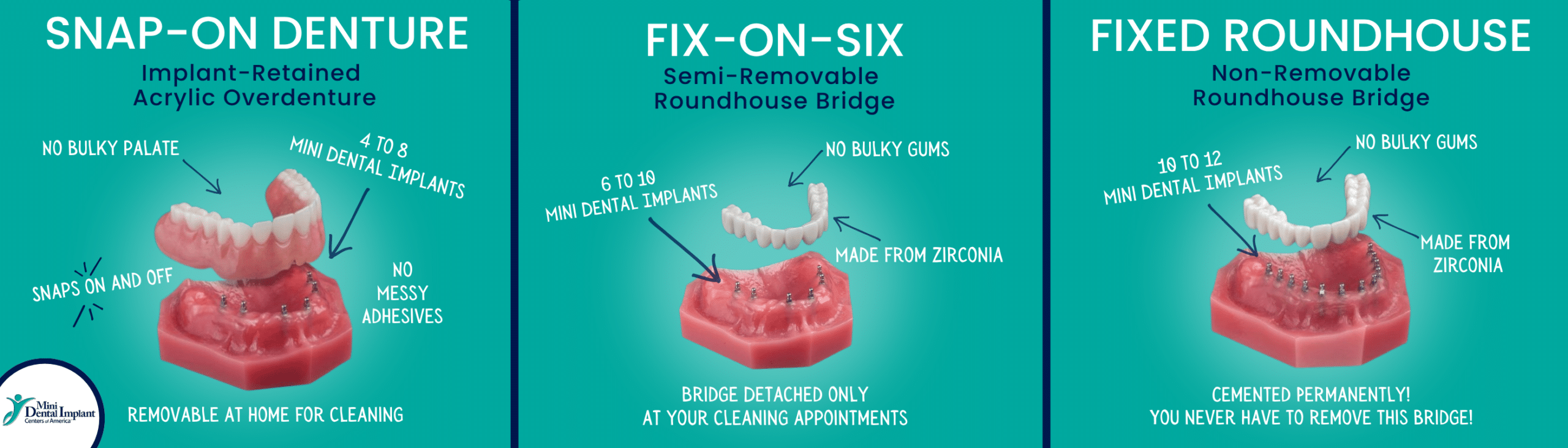
Snap-on dentures, also called overdentures, are a popular solution. These dentures attach securely to mini implants, letting you snap them into place. For more stability, semi-removable dentures are a great option. Sometimes called a fixed hybrid bridge, this choice offers a natural feel and stronger bite force. The prosthesis stays in place and attaches to multiple mini implants. It only comes out when our dentists remove it during check-ups for professional cleaning.
For the highest level of stability, non-removable dentures are an excellent choice. We anchor these full-arch bridges to dental implants and permanently secure them to function like natural teeth. Each implant-supported option can be customized to fit your needs. They offer different levels of permanence, convenience, and support to help restore both function and comfort to your smile.
What Is the Full Tooth Replacement Process?
Step 1: Securing a Healthy Foundation
Your full-mouth reconstruction starts with a thorough examination to assess your dental health. We use X-rays or CT scans to get a detailed view of your teeth, gums, and bone structure. Then we discuss your goals and create a customized treatment plan.
We prioritize keeping your gums healthy. If we detect gum disease, we treat it immediately. Sometimes, teeth that are too damaged or decayed need removal. When a tooth is beyond saving or affected by bone loss, extraction is the best option.
This approach creates a healthy, stable base for your new dental restorations and supports long-term success.
Step 2: Restoring Function With Mini Dental Implants
For full teeth replacement, we place several mini dental implants across the jaw to support a complete arch of replacement teeth. The implants are small titanium posts that sit in the jawbone and provide secure attachment points for the teeth above them.
How your new teeth connect to the implants depends on the restoration you choose. Mini implants can stabilize a snap-on denture you remove at home, support a semi-removable restoration we remove, or secure fixed teeth that stay in your mouth. Each option uses the implants for support but offers different levels of stability and permanence.
Their smaller diameter is important when bone loss has occurred. Mini implants require less bone than larger conventional implants, making full teeth replacement possible for some patients told they lack enough bone for traditional implants. Your available bone, remaining teeth, and the type of replacement teeth you want help determine which approach may work for you.
Full Mouth Reconstruction vs. Full Teeth Replacement: A Closer Look
Full teeth replacement and full mouth reconstruction aren’t the same. With full teeth replacement, we replace all teeth in the upper jaw, lower jaw, or both. Your new teeth may be removable, supported by dental implants, or fixed in place.
Full mouth reconstruction may involve several dental problems at once. You might have missing teeth in one area, damaged teeth in another, or gum or bite problems needing attention. Often, some natural teeth can stay while others need repair or replacement.
The two can overlap. If you need to replace all your teeth as part of rebuilding your oral health, full teeth replacement may be part of your full mouth reconstruction.
Restore Your Smile With Mini Dental Implants
A full set of replacement teeth can look very different from one person to the next. Some people want a removable denture. Others want their teeth to stay firmly in place. Bone loss can affect your options, but it does not always rule out implant treatment.
At Diana Rodriguez and Associates, we use mini dental implants to support several types of full-arch restorations, including options for patients with limited bone. During your free consultation, we can evaluate your teeth and jaw, explain what each restoration would involve, and help you compare your options.
Schedule your free consultation in Union City, NJ, and see which full teeth replacement options may work for you.